

 23 June 2026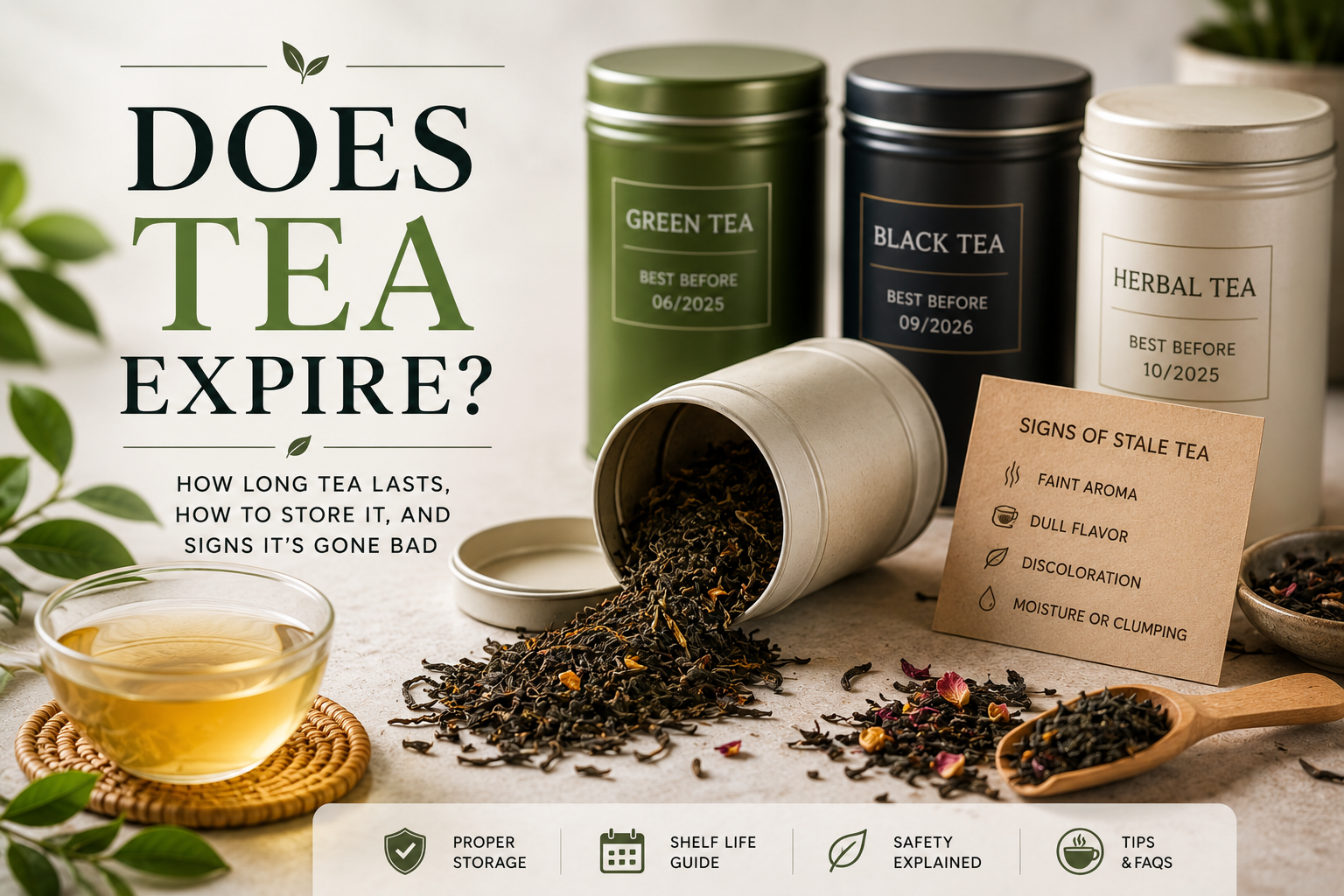
Does tea expire? If you’ve ever found an old tin of tea hiding in the back of your cabinet, you’ve probably asked yourself this exact question. The good news is that tea doesn’t usually spoil the way milk or fresh food does. However, tea can lose its flavor, aroma, and freshness over time.
Whether you enjoy black tea, green tea, herbal tea, or oolong tea, understanding how long tea lasts can help you get the most out of every cup.
Does Tea Expire?
The short answer is yes, tea expires in terms of quality, but not necessarily safety.
Most dried teas can remain safe to drink for years if stored properly. What changes is the flavor. Over time, tea leaves lose the natural oils and compounds responsible for their aroma and taste. An old tea may still brew into a drinkable cup, but it may taste flat, dull, or stale compared to a fresh batch.
Think of tea like dried herbs or spices. They don’t suddenly become dangerous after a certain date, but they gradually lose their potency.
How Long Does Tea Last?
The answer depends on the type of tea and how it is stored.
Black Tea
Black tea is one of the longest-lasting varieties because it is fully oxidized during processing.
Typical shelf life:
- 2–3 years for best flavor
- Often safe beyond that if stored properly
Green Tea
Green tea is much more delicate and tends to lose freshness faster.
Typical shelf life:
- 6–12 months for peak flavor
- Up to 2 years if stored well
White Tea
White tea is lightly processed and can maintain quality for one to two years. Some specialty white teas are intentionally aged and may develop unique flavors over time.
Oolong Tea
Oolong tea falls somewhere between green and black tea.
Typical shelf life:
- 1–2 years for lighter oolongs
- Several years for darker roasted oolongs
Herbal Tea
Herbal teas made from flowers, fruits, herbs, and spices generally remain fresh for one to two years.
What Causes Tea to Go Stale?
When people ask, “Does tea expire?” they’re usually noticing that an older tea doesn’t taste as good as it used to.
The biggest enemies of tea freshness are:
Air
Oxygen slowly breaks down flavor compounds and aromatic oils.
Moisture
Tea absorbs moisture from the environment. Too much moisture can lead to mold growth and ruined tea.
Heat
Warm temperatures speed up the aging process and reduce freshness.
Light
Direct sunlight can damage tea leaves and degrade flavor.
How to Store Tea Properly
Proper storage is the best way to extend the life of your tea.
For the best results:
- Store tea in an airtight container.
- Keep tea away from sunlight.
- Avoid humid locations.
- Store tea away from strong odors such as spices and coffee.
- Use opaque tins or containers whenever possible.
A cool, dark pantry is usually the ideal location.
Signs Your Tea Has Gone Bad
Tea that has simply become stale is usually safe to drink. Tea that has gone bad due to moisture or contamination should be discarded.
Watch for these warning signs:
Musty Smell
Fresh tea should smell pleasant and aromatic. A musty or moldy odor is a red flag.
Visible Mold
If you see any mold, throw the tea away immediately.
Clumping
Dry tea leaves should remain loose. Unusual clumping can indicate moisture exposure.
Weak Flavor
Tea that tastes bland or lifeless has likely lost much of its freshness.
Can You Drink Expired Tea?
In many cases, yes.
If the tea has been stored properly and shows no signs of mold or moisture damage, it is usually safe to drink even after its best-by date. The biggest difference will be flavor quality rather than safety.
Many people are surprised to discover that a three-year-old black tea can still make a decent cup if it has been stored correctly.
Loose Leaf Tea vs. Tea Bags
Loose leaf tea often maintains freshness longer than tea bags.
Because loose leaves are larger and less processed, they expose less surface area to air. Tea bags typically contain smaller leaf particles that lose flavor more quickly.
This is one reason many tea enthusiasts prefer loose leaf tea for both flavor and longevity.
Frequently Asked Questions
Does tea expire if unopened?
Yes, but unopened tea generally stays fresh longer because it has less exposure to air.
Does tea expire in tea bags?
Tea bags can expire just like loose leaf tea. Proper storage is still important.
Can old tea make you sick?
Tea that has simply become old usually will not make you sick. However, tea exposed to moisture and mold should never be consumed.
Should I throw away expired tea?
Not necessarily. Brew a cup and evaluate the flavor. If it smells and tastes fine, it’s probably still usable.
Final Thoughts
So, does tea expire? Technically yes, but expiration for tea is more about quality than safety. Properly stored tea can remain enjoyable long after the date printed on the package, although flavor and aroma will gradually decline.
The best way to keep tea fresh is to store it in an airtight container, away from heat, light, moisture, and strong odors. By following a few simple storage practices, you can enjoy flavorful tea for months or even years after purchase.
At C Tea House, we believe every cup should be as fresh and flavorful as possible. Whether you’re enjoying a bold black tea, a delicate green tea, or a soothing herbal blend, proper storage helps ensure you experience tea the way it was meant to be enjoyed.
Our Origin
Eastern European tea traditions remind us that tea is more than just a drink. It is about warmth, hospitality, and bringing people together. At C Tea House, this spirit is part of our story as well. Our journey began as Crepes Tea House, a small café where tea was served alongside crepes and conversation. Over time, our passion for loose leaf tea grew into something bigger, leading to the creation of C Tea House. Today we continue exploring tea cultures from around the world and sharing them with our community, one cup at a time. Visit our restaurant site at crepesteahouse.com!
Looking for more blogs? No problem! Click here to view more!