

 16 June 2026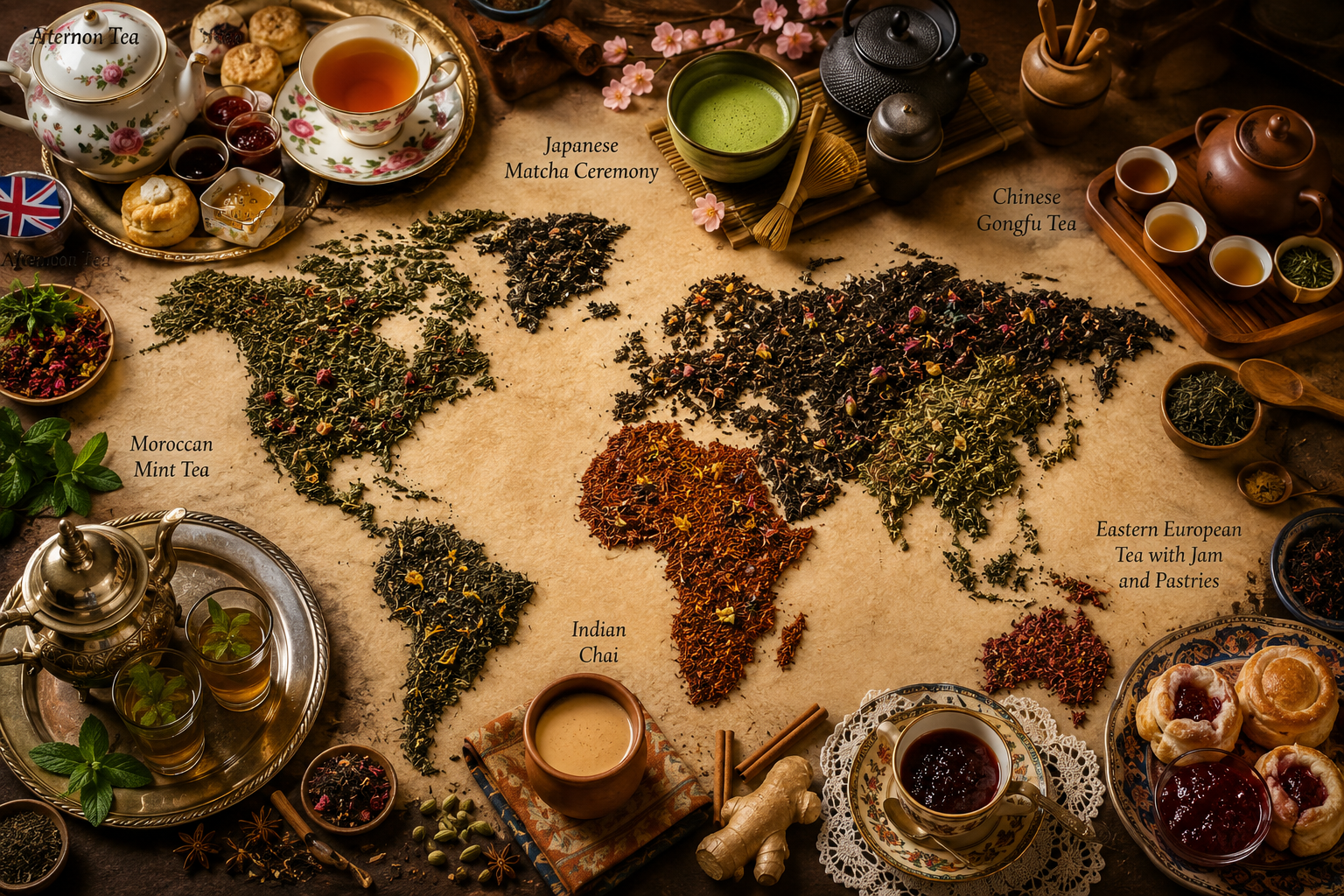
Tea Culture Around the World: How Different Countries Enjoy Tea Traditions
Tea is one of the most beloved beverages on Earth. While coffee often dominates conversations about daily routines and café culture, tea remains deeply woven into the history, traditions, and social customs of countless nations. Exploring tea culture around the world reveals far more than different brewing methods. It offers a glimpse into how people gather, celebrate, relax, and connect with one another.
The fascinating aspect of tea culture around the world is that every country has transformed tea into something uniquely its own. Some cultures treat tea as a ceremonial art form, while others enjoy it as a daily comfort shared among family and friends. From Japanese tea ceremonies and British afternoon tea to the rich traditions of Eastern Europe, tea culture around the world demonstrates how one beverage can unite people while still reflecting local customs and values.
At Crepes Tea House, our Eastern European roots have inspired a deep appreciation for global tea traditions. While we proudly offer teas from many regions, we also recognize the special role tea plays throughout Eastern Europe. Understanding tea culture around the world helps us appreciate both the differences and similarities that make tea such a universal drink.
China: The Birthplace of Tea
Any discussion of tea culture around the world begins in China. Tea originated in China thousands of years ago and remains central to daily life today. Chinese tea traditions emphasize quality leaves, proper preparation, and mindfulness.
One of the most respected practices is Gongfu Cha, often translated as “making tea with skill.” This brewing method uses small teapots and multiple short infusions to fully appreciate the complexity of the tea leaves.
In Chinese tea culture around the world, tea is more than a beverage. It symbolizes hospitality, respect, and harmony. Different regions favor different teas, including green tea, white tea, oolong tea, black tea, and pu-erh tea.
The influence of Chinese tea traditions can be found throughout much of tea culture around the world, as many countries adapted Chinese practices to create their own unique customs.
Japan: Tea as an Art Form
Japan offers one of the most refined examples of tea culture around the world. The Japanese tea ceremony, known as Chanoyu, transforms tea preparation into a carefully choreographed experience focused on harmony, respect, purity, and tranquility.
Matcha plays a central role in Japanese tea traditions. Unlike many teas that are steeped and removed, matcha consists of finely ground tea leaves whisked directly into water.
Japanese tea culture around the world emphasizes mindfulness. Every movement, utensil, and gesture carries meaning. While formal ceremonies remain important, tea is also enjoyed casually throughout Japan in homes, cafés, and restaurants.
The growing popularity of matcha worldwide has introduced many people to this beautiful aspect of tea culture around the world.
India: Chai and Community
India contributes one of the most recognizable traditions within tea culture around the world through chai. Indian chai combines black tea with milk, sugar, and spices such as cardamom, cinnamon, ginger, and cloves.
Street vendors known as chaiwalas serve millions of cups daily. Tea is woven into daily life, business meetings, train stations, family gatherings, and social interactions.
In Indian tea culture around the world, sharing tea often symbolizes hospitality and friendship. Offering a guest tea is considered a gesture of warmth and welcome.
India is also one of the largest tea-producing countries in the world, supplying famous varieties such as Darjeeling and Assam. These teas have become important components of tea culture around the world far beyond India’s borders.
Great Britain: The Tradition of Afternoon Tea
Perhaps no country is more closely associated with tea in the Western world than Britain. British contributions to tea culture around the world include afternoon tea, tea rooms, and the famous phrase “a nice cup of tea.”
Afternoon tea emerged during the nineteenth century and traditionally includes tea served alongside sandwiches, scones, and pastries. While modern schedules have changed, tea remains a beloved part of British life.
British tea culture around the world helped spread tea consumption throughout many regions during the era of the British Empire. Black tea with milk became particularly popular and remains a staple today.
The elegance and social nature of British tea traditions continue to influence cafés and tea houses across the globe.
Morocco: The Ritual of Mint Tea
Moroccan mint tea offers another fascinating chapter in tea culture around the world. Prepared using green tea, fresh mint, and sugar, Moroccan tea is known for its distinctive pouring technique.
Hosts often pour tea from a height to create a light foam on the surface. This process is both practical and ceremonial.
Within Moroccan tea culture around the world, serving tea demonstrates hospitality and respect. Refusing tea can sometimes be interpreted as declining friendship.
The vibrant flavors and welcoming customs associated with Moroccan tea continue to attract tea lovers seeking new experiences within tea culture around the world.
Turkey: Tea at Every Hour
Turkey boasts one of the highest rates of tea consumption per person. Tea is served throughout the day in homes, workplaces, markets, and cafés.
Turkish tea is typically prepared using a double teapot system and served in elegant tulip-shaped glasses. Strong tea can be diluted according to personal preference.
Turkish traditions contribute significantly to tea culture around the world because tea acts as a social connector. Conversations, negotiations, and gatherings frequently begin with a glass of tea.
Visitors quickly discover that hospitality and tea go hand in hand throughout Turkish tea culture around the world.
Eastern Europe: Tea, Hospitality, and Family Traditions
Among the many examples of tea culture around the world, Eastern Europe holds a special place in our hearts at Crepes Tea House.
Tea became deeply embedded in Eastern European life through centuries of trade, cultural exchange, and family traditions. Countries such as Belarus, Ukraine, Russia, Poland, Lithuania, and other neighboring nations developed unique tea customs that remain important today.
A defining feature of Eastern European tea culture around the world is the emphasis on gathering around the table. Tea is rarely rushed. Instead, it often accompanies long conversations with family and friends.
In many households, tea is served alongside homemade pastries, cookies, cakes, preserves, and seasonal fruits. Rather than functioning solely as a beverage, tea becomes part of an extended social experience.
The Samovar Tradition
One of the most recognizable symbols of Eastern European tea culture around the world is the samovar.
A samovar is a traditional metal vessel used to heat water for tea. Historically, families would gather around the samovar for hours, enjoying conversation while continually refilling their cups.
Strong tea concentrate was often brewed separately and diluted with hot water from the samovar according to individual taste preferences.
Although modern kettles have largely replaced samovars in everyday life, the samovar remains an enduring symbol of Eastern European tea culture around the world.
Tea with Jam and Preserves
Another unique aspect of Eastern European tea culture around the world is the use of jam and preserves.
Instead of adding sugar directly to tea, some people enjoy taking a spoonful of fruit preserves between sips. Raspberry, cherry, black currant, and strawberry preserves are especially popular.
This practice creates a distinctive flavor experience and highlights the resourcefulness of traditional households that preserved fruits throughout the year.
For many families, this custom remains one of the most cherished elements of tea culture around the world.
Tea During Every Season
Unlike some cultures that associate tea primarily with specific occasions, Eastern European tea culture around the world embraces tea year-round.
During cold winters, black teas provide warmth and comfort. Herbal infusions featuring chamomile, mint, rose hips, or berries are also common.
In warmer months, tea continues to serve as a gathering beverage during outdoor meals, celebrations, and family visits.
This adaptability helps explain why tea remains such an enduring part of Eastern European tea culture around the world.
How Tea Connects the World
One of the most remarkable aspects of tea culture around the world is the balance between diversity and similarity.
The preparation methods may differ dramatically. Ingredients vary. Ceremonies range from highly formal to completely casual. Yet the purpose often remains the same.
Tea brings people together.
Whether someone is participating in a Japanese tea ceremony, sharing chai in India, enjoying afternoon tea in Britain, sipping mint tea in Morocco, or gathering around a table in Eastern Europe, tea creates opportunities for connection.
The enduring popularity of tea culture around the world reflects a universal human desire for community, comfort, and conversation.
Final Thoughts
Exploring tea culture around the world reveals how a simple beverage has shaped traditions across continents and generations. Every region contributes its own flavors, customs, and stories, creating a rich tapestry of tea experiences.
For us at Crepes Tea House, our appreciation for tea culture around the world is deeply connected to our Eastern European heritage. The traditions of gathering around tea, sharing conversation, and welcoming guests continue to inspire what we do every day.
Whether you prefer Chinese green tea, Japanese matcha, Indian chai, British black tea, Moroccan mint tea, Turkish tea, or Eastern European favorites, each cup offers an opportunity to participate in the remarkable story of tea culture around the world.
With more than 130 unique loose-leaf teas available, we invite you to discover your own favorite traditions and experience the beauty of tea culture around the world one cup at a time.
Our Origin
Eastern European tea traditions remind us that tea is more than just a drink. It is about warmth, hospitality, and bringing people together. At C Tea House, this spirit is part of our story as well. Our journey began as Crepes Tea House, a small café where tea was served alongside crepes and conversation. Over time, our passion for loose leaf tea grew into something bigger, leading to the creation of C Tea House. Today we continue exploring tea cultures from around the world and sharing them with our community, one cup at a time. Visit our restaurant site at crepesteahouse.com!
Looking for more blogs? No problem! Click here to view more!